The feature I want every AI rollout to copy
Most organizations still measure AI adoption with the wrong proxies: seats activated, logins, maybe a survey once a quarter. None of that tells you whether AI is doing anything useful, or for whom.
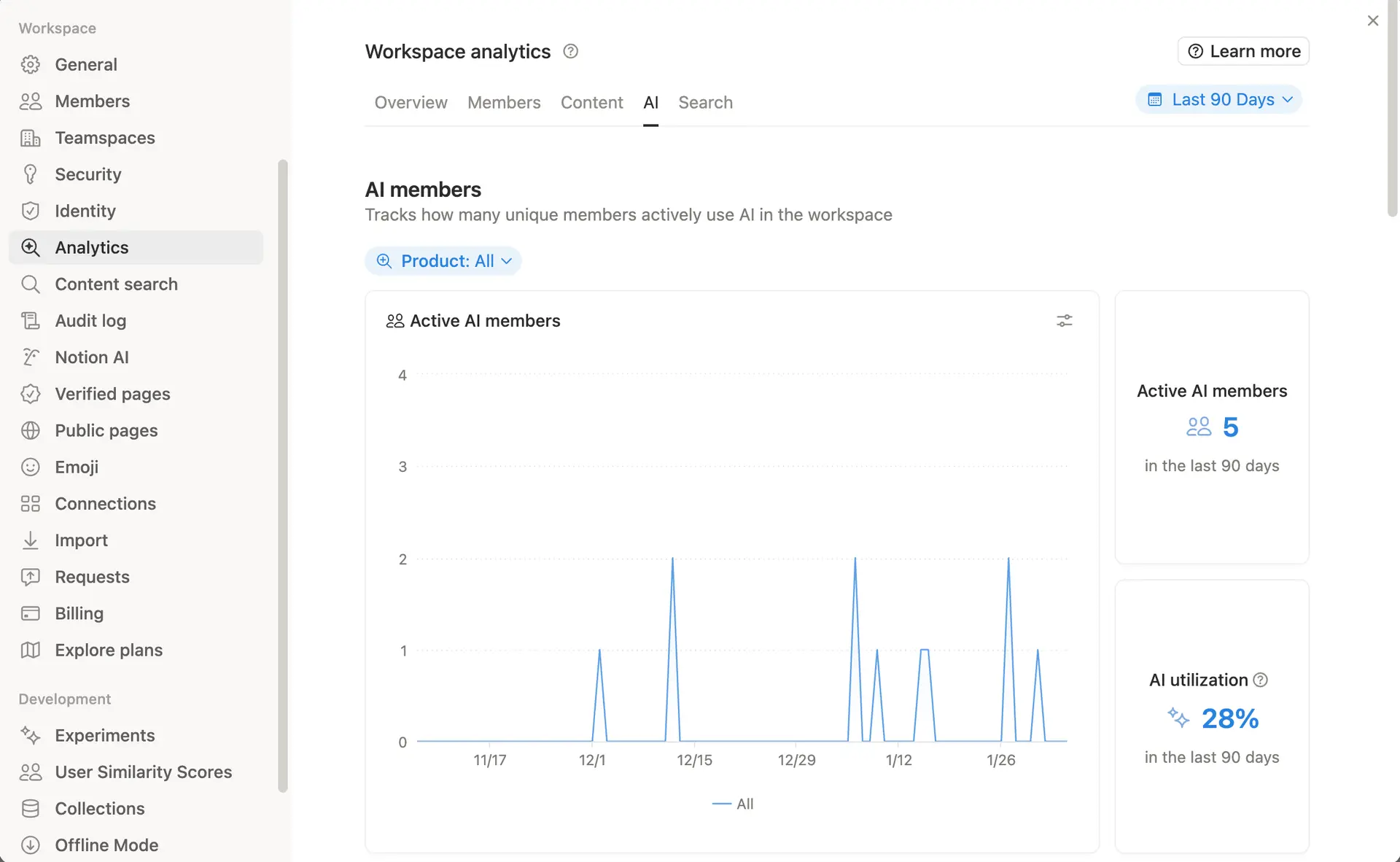
Notion took a different approach. Inside Workspace Analytics, there's an AI tab that tracks:
- Active AI members and AI actions over time
- AI actions per user, plus an "AI utilization" rate: the percentage of active workspace members who are also using AI
- A breakdown by feature: Agents, Connectors, Meeting notes
- The top 100 pages that actually show up in AI responses
- CSV export, refreshed daily
That last point is the one that matters most. Most adoption dashboards stop at "who used it." Notion ties usage back to content: which pages AI is actually pulling from and surfacing. That turns an adoption dashboard into a content-gap detector. If a page never appears in AI answers, that's worth investigating: is it undiscoverable, outdated, or just not useful enough to be cited?


Why this matters beyond Notion
Strip away the brand name, and the underlying idea holds for any AI rollout, on any platform: adoption isn't a headcount metric; it's a behavior-and-content metric. Whatever tool you're evaluating or building for AI enablement, ask two questions before anything else:
- Are we measuring actions, not access?
- Can we trace those actions back to specific content or workflows, so we actually know what's working?
If the answer to either is no, there's no adoption program yet, only a licensing report.
📌 This depth of AI analytics (per-page attribution, AI utilization, feature-level breakdowns) currently sits behind Notion's Enterprise plan. Business includes core AI features but not this same workspace-wide usage view. Worth confirming against your own plan before building a process around it.
Measurement is not the same as governance
Here's where I'll push back on the industry's current instinct: treating AI adoption as a compliance problem. Meta has reportedly tied performance reviews to AI usage, turning "did you use AI enough" into a KPI attached to your bonus. That's a mandate, and mandates produce compliance theater: people use the tool to be seen using it, not because it helped them.
Adoption does not work that way, especially not for AI. It comes from pull, not push. People adopt a tool once they have seen it solve a real, specific, unglamorous problem for them; not because their raise depends on it. Dashboards like Notion's AI tab are useful for exactly this reason: they let you see where pull is naturally happening, and where it isn't, instead of forcing usage everywhere and calling the resulting numbers "adoption."
When the metric becomes the target
Some companies went a step further than mandates: they gamified raw usage itself. Meta reportedly built an internal dashboard called "Claudeonomics" that ranked around 85,000 employees by token consumption, complete with a gamified "Token Legend" tier; Amazon ran a similar leaderboard pushing staff to "tokenmax." Nvidia's CEO said publicly he would be "deeply alarmed" if an engineer earning $500,000 was not consuming at least $250,000 worth of tokens a year.
That is Goodhart's Law with extra steps: raw token volume says nothing about whether the work was useful, only that the meter was running. The bill arrived fast. Uber reportedly burned through its entire 2026 AI coding budget in about four months after rapid Claude Code adoption, with its CTO saying the company was "back to the drawing board" on AI budgeting. Microsoft's own numbers reportedly showed AI compute now costing more than the employees using it, and Microsoft, Adobe, Walmart, and Cisco have all since throttled internal AI access; the token leaderboards, including Meta's, were quietly switched off.
None of this means usage isn't worth tracking. It means the wrong thing was tracked. Volume (tokens burned, prompts sent) is not the same signal as value (did this action produce something someone actually used). That is the gap Notion's AI tab is at least trying to close by tying actions back to the pages they touched, instead of stopping at a raw usage count.
Visibility first, limits later
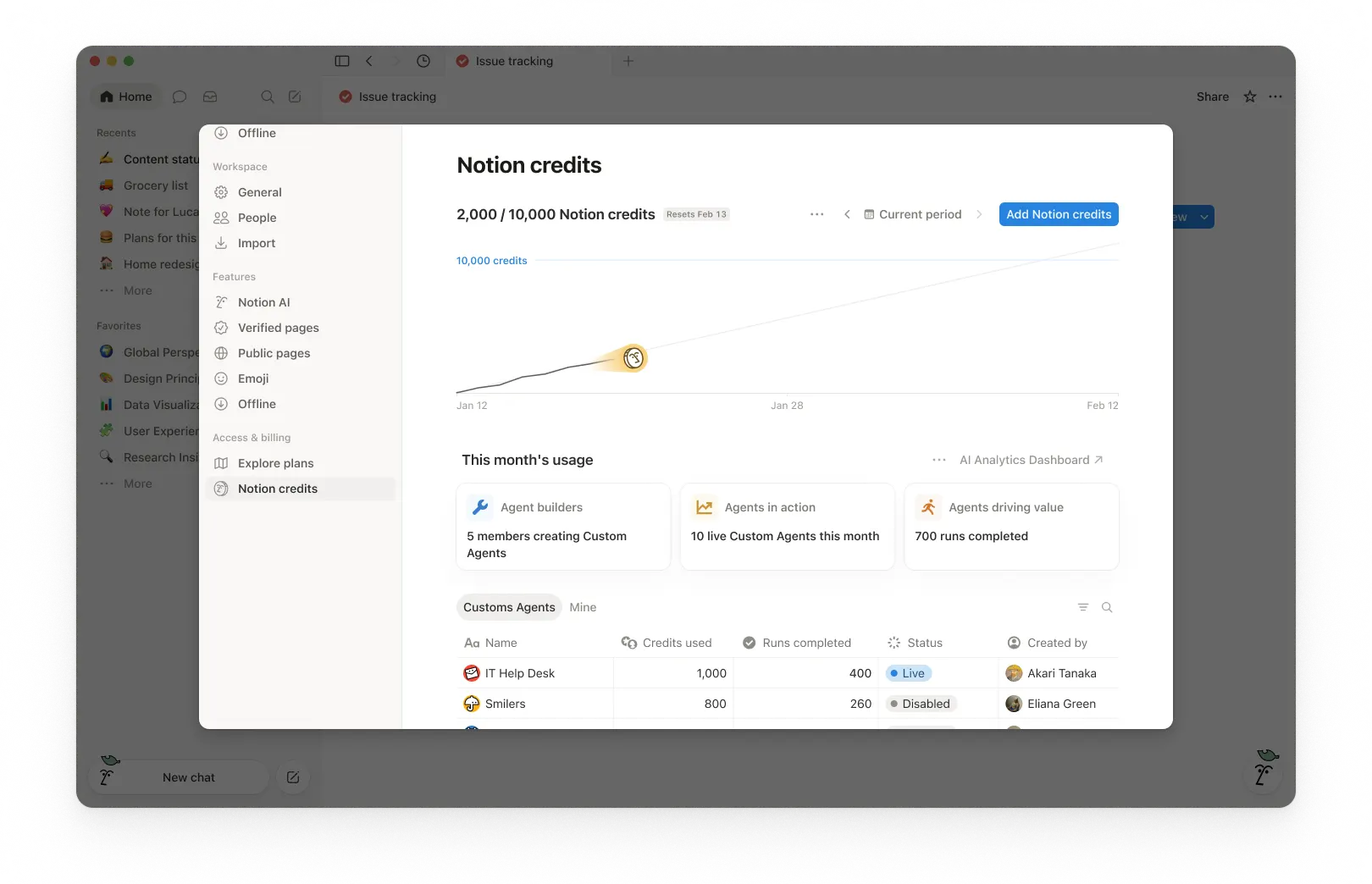
Notion's own AI rollout followed the same order this post is arguing for. Notion Agent, AI Meeting Notes, and Enterprise Search never carried a hard usage cap; they still don't. When Notion introduced autonomous Custom Agents, capable of running unattended and burning meaningfully more compute per task, it did not open with a cap either. Custom Agents launched in free exploration on February 24, 2026, and the Notion credits dashboard shipped alongside them so admins could watch usage patterns and estimate future needs, months before any bill or limit applied.
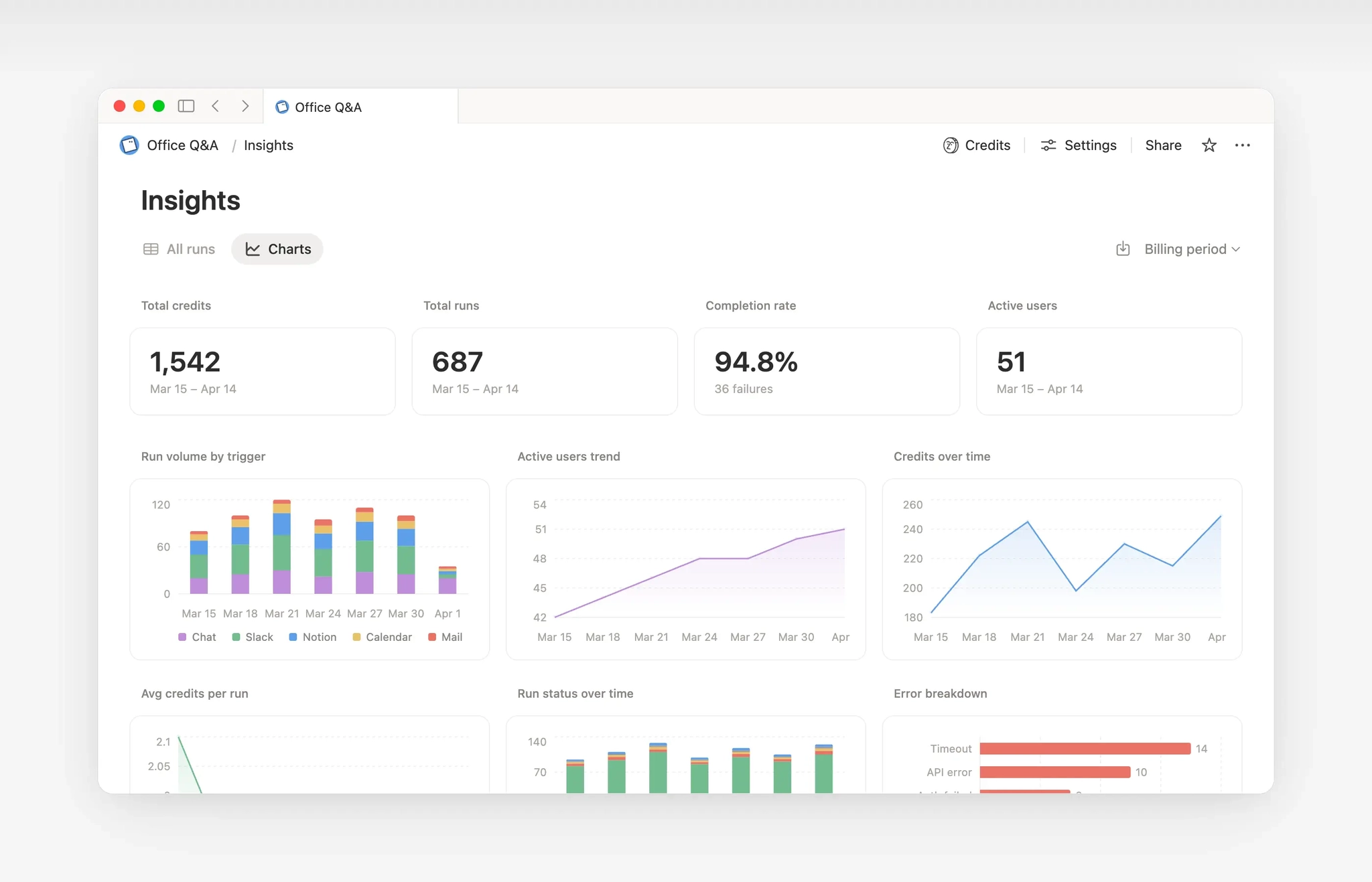
That sequencing bought people something valuable: room to build agents, see what each one actually cost against what it delivered, and tune the balance between consumption and impact before anyone had to defend a number. Only once teams had that visibility did Notion hand admins granular enforcement: choose who can create agents, set a spend limit per agent or one workspace-wide cap, and disable a runaway agent instantly, all from the same dashboard that had already been teaching people what normal usage looked like. Encouragement to build and improve agents came first; the guardrails arrived once there was real data to set them against.
That is the opposite of what the token leaderboards did: put a governance mechanism, whether a rate limit or a ranking, in front of anyone before they had learned what a sane ratio of consumption to output even looks like for their own use case. Notion optimized for the number that actually matters: outcome per credit, not credits burned per employee.
A small proof, not a mandate
Iradaty Bot is the clearest example I have of this in practice. It did not start as an AI initiative. It started because a small, resource-constrained NGO team was already reporting field updates over WhatsApp, since that was the one app that reliably worked where they operate. Every Friday evening, I exported the group chat and ran it through a small Python script that pulled out each person's "daily report" with dates and authors. That is it: no new tool, no training, no mandate; just less manual pain around a habit that already existed.
That small, unglamorous automation is what earned the trust to go further. It grew into a structured reporting workflow, and eventually into a proactive Telegram agent that follows up with the team directly, structures updates as they arrive, and feeds a searchable knowledge base instead of a pile of screenshots and voice notes. Nobody was told to switch to Telegram or to "use AI more." The tool got more useful, so people used it more. Proof came first; adoption followed.
The takeaway
Whatever you are rolling out, that is the order that works: build something that removes real pain inside the workflow people already have, measure what they actually do with it rather than whether they were handed a license, and let the results make your case. Notion's AI analytics are a good instrument for the "measure what they actually do" part. The instrument only matters if it is used to earn adoption, not enforce it.
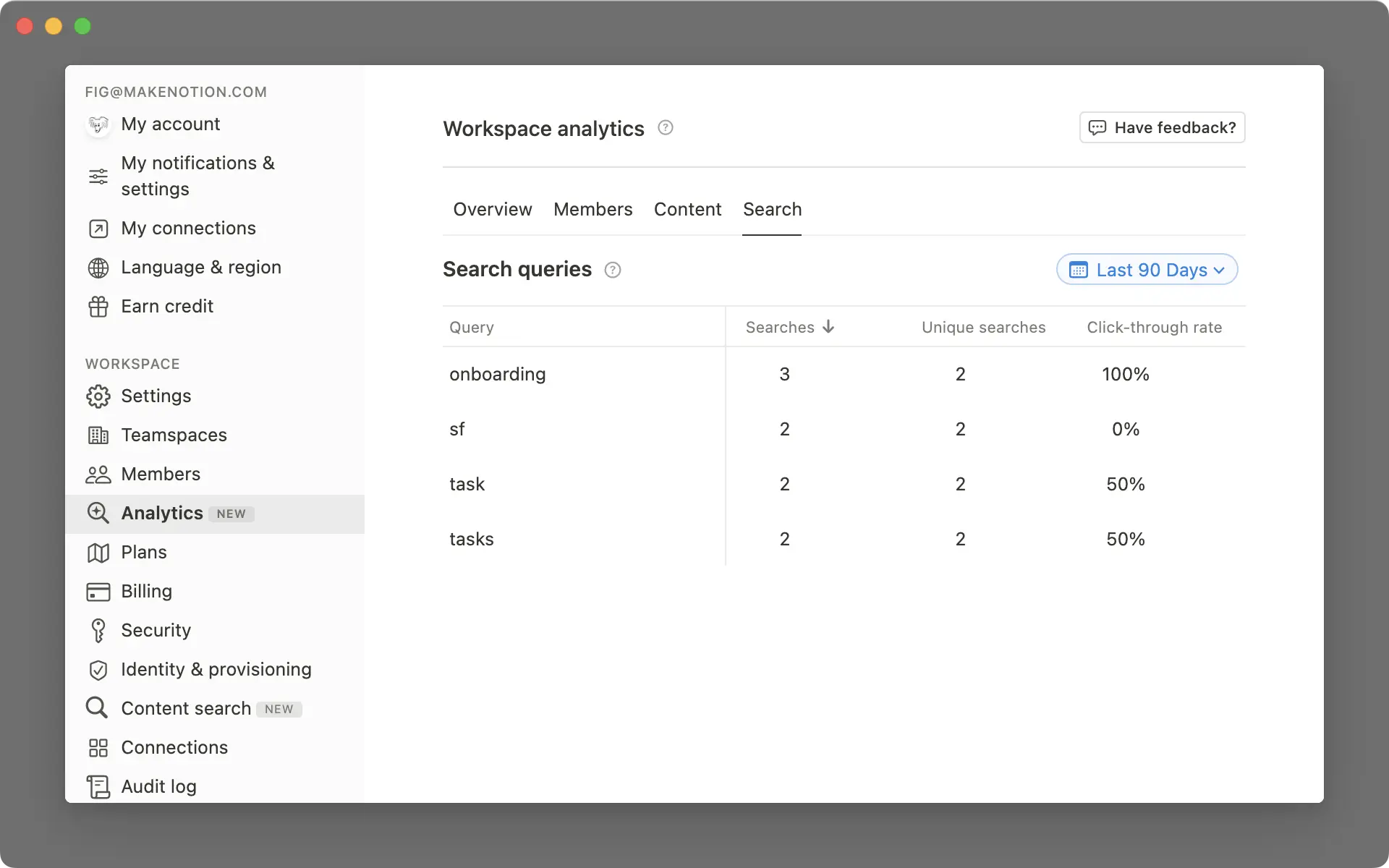
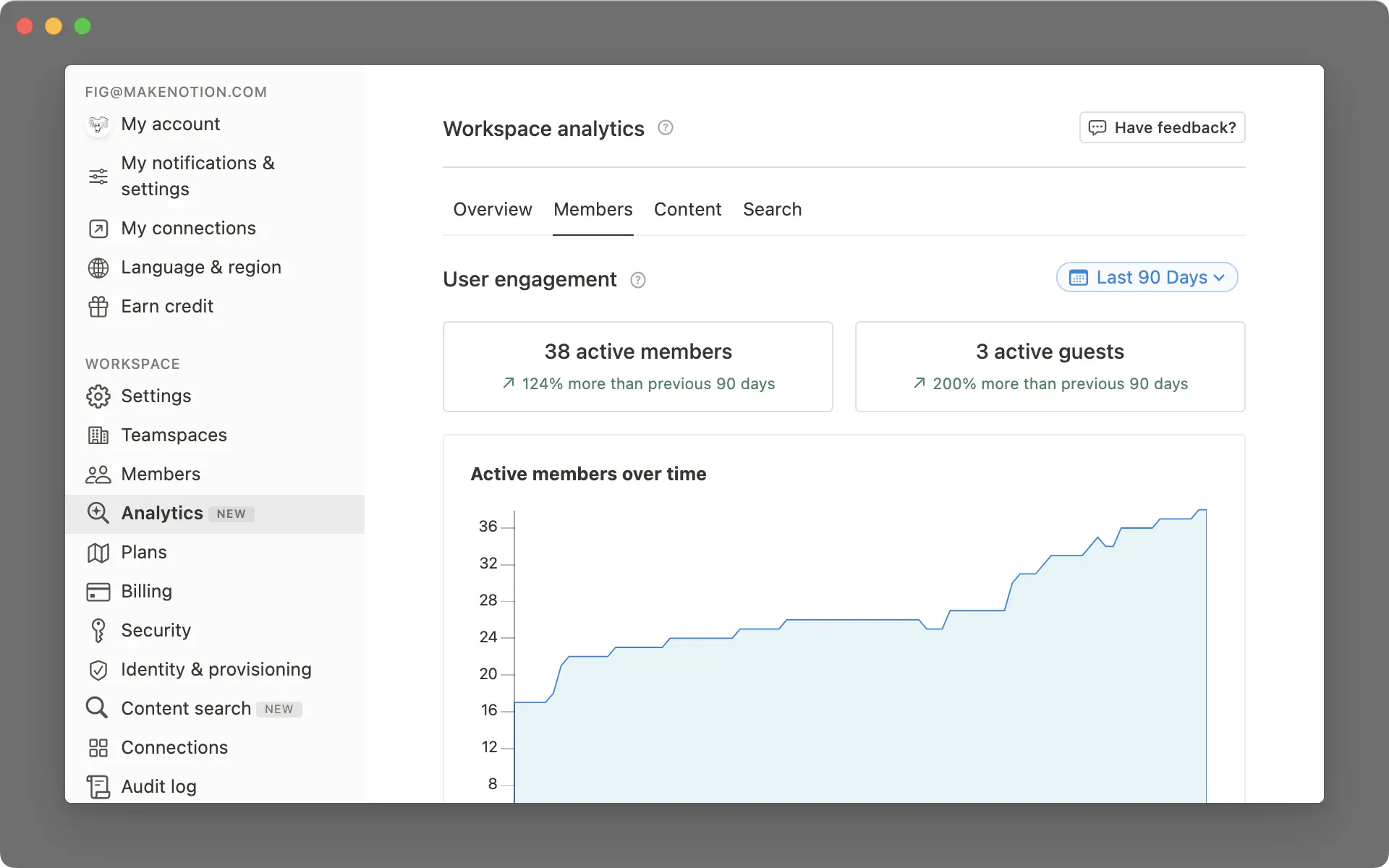
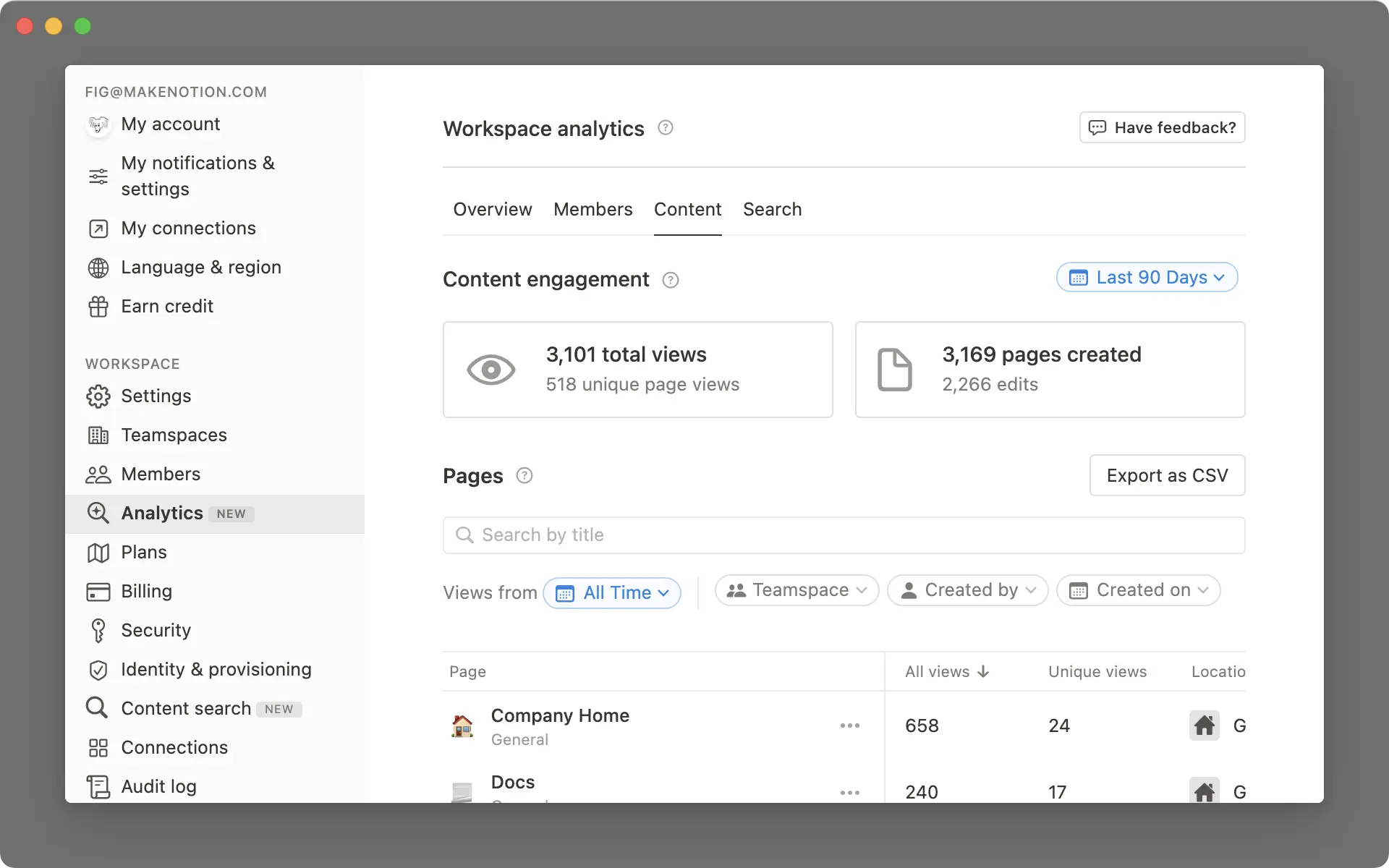
Other Workspace Analytics tabs (parking for later)
Not AI-specific, so not used above; keeping these here in case they're useful elsewhere on the site.



كيف يساعدك Notion على تجاوز فخ المؤشرات الذي وقعت فيه كبرى الشركات؟
الجميع سمع بقصة أوبر وكيف أحرقت توكنز السنة كلها في بضعة أشهر، وكيف شجعت كبرى الشركات مهندسيها على استخدام الذكاء الاصطناعي مثل شرب الماء إلى أن ندمو وتراجعوا وانتشرت القصص المؤسفة عن كمية الاستهلاك الخيالية التي وصل لها الموظفين بدون زيادة تذكر في الإنتاجية.
ما اللغز؟الحقيقة، لا لغز ولا شي...
موضوع بسيط جداً يعرفه أي مدير عمليات واعٍ، لم تأخذه هوجة الذكاء الاصطناعي، ولم يقلّد كبار المدراء التنفيذيين الذين تفوهوا بما يشبه ما قاله مدير إنفيديا: أقلق من المهندس الذي أدفع له 500 ألف راتباً ولا يصرف ما يعادل 250 ألف توكنات! 💣
لا يا شيخ! أولا تقلق من أن تحوّل عبارتك الرنانة هذه هذا المؤشر الغامض إلى هدف؟ ألم تسمع بقانون جودهارت؟
يبدو أنه نسي، والغالب أنه تناسى (ولهذا الحديث موضع آخر) ... وبالنتيجة أوقع كثيرين قلدوه (وهو استفاد طبعاً 🙂). فحتى ميتا ومايكروسوفت عملوا غلطات شنيعة في نفس الاتجاه، سأحكي لكم عنها في منشور لاحق.
المهم، صارت الألسن اليوم تلوك سيرة التكاليف الضخمة للذكاء الاصطناعي من وراء هذه الهوجة التي اختارت للإنتاجية مؤشرات ملغومة.
بيت القصيد هنا هو البديل الذي يقدمه نوشن💡
البديل طبعاً يبدأ من العقلية وليس من الأداة. العقلية التي تدرك الفروق بين مؤشرات الدخل ومؤشرات الخرج، والفرق بين المؤشرات المبكرة والمتأخرة، وتدرك أن لكلٍّ أهميته وأغراضه ومحاذيره.
أما بعد، فبما أن زمننا هذا قد اختص بسهولة قياس الكثير من المؤشرات التي كانت تستحيل على من سبقونا، فإن العاقل اليوم لا يركض وراء كل مؤشر يستطيع قياسه وإن سَهُل، بل يتدبر الأدوات وينتقي ما لا يكتفي بشكل واحد من المؤشرات إن لم يقدم شفافية حقيقية ومرنة، تستطيع أن ترصد مختلف المقاييس دون أن ترهق الموارد المؤسسية في جمعها أو في تحليلها.
طيب ما علاقة كل هذا بنوشن؟
تذكرت هذه الخاطرة وأنا أدرس ميزة لنوشن يسمونها Notion Workspace Analytics
هذه الميزة توفر لمدير مساحة العمل لوحة بيانات متعددة المحاور،
منها ما يتعلق بالمستخدمين ودرجة نشاطهم،
ومنها ما يتعلق بالمحتوى ما اشتهر منها وما خمل،
ومنها ما يتعلق بالذكاء الاصطناعي ووكلائه واستهلاكهم ونشاطهم وبُنّائهم ومستخدميهم.
هذه النظرة التفصيلية تساعد من يدير هذه المساحة على فهم ما يجري في ساحة العمل من زوايا مختلفة. فيستطيع من خلالها معرفة:
هل يستعمل الموظفون الذكاء الاصطناعي؟ من يستعمله بكثرة؟ كيف يستعملونه؟
كم يصرف كل من الوكلاء المستقلين يومياً وشهرياً؟ وهل يساوي مصروف كل وكيل ما يقدمه من قيمة للفريق؟
ما المحتوى الذي يعاد استخدامه بشكل متكرر؟ وما المحتوى الذي خمل ولم يعد يستخدم لا من الناس ولا من الوكلاء؟
وبالتالي، إن توفرت معلومات كهذه لمدير مستنير، لاستطاع أن يتعامل مع ما يسمى AI Enablement أو Adoption أو Change Management بطريقة ذكية توفر عليه جهداً كبيراً في التشخيص والتحسين، وصولاً إلى البيئة التي تحسن وتنظف نفسها بشكل مستمر، وبدون توليد احتكاك ومقاومة غير ضروريتين مع الموارد البشرية وغير البشرية للشركة.
أقول قولي هذا وأدعوكم لمشاركتي تجاربكم في إدماج التغيير التقني وإدماج الذكاء الاصطناعي في شركاتكم.
وشكراً